Examining Soba Noodles’ Outstanding Cardiovascular and Nutritional Profile
In the vast and varied world of noodles, Soba stands out as a true nutritional powerhouse. Originating in Japan, these thin, brownish-grey strands are not just revered for their satisfying, slightly nutty flavor and delightfully springy texture—they are celebrated for their remarkable health benefits, stemming directly from their core ingredient: buckwheat.
Contrary to what the name suggests, buckwheat is not a form of wheat; it is a pseudocereal—a seed related to rhubarb and sorrel—making it a distinct choice from standard wheat-based pastas. This difference in composition is what unlocks Soba’s impressive health credentials.
This guide dives into the top benefits and breaks down the key nutritional facts of Soba noodles, helping you make the healthiest choices for your bowl.
Understanding the Soba Difference: Buckwheat is Key
The nutritional value of Soba noodles is directly linked to the proportion of buckwheat flour used.
- Juwari Soba (100% Buckwheat): This is the purest form. It is naturally gluten-free and offers the maximum nutritional punch, including a stronger, earthier flavor.
- Nihachi Soba (80% Buckwheat / 20% Wheat): A common blend that is easier to work with (wheat adds elasticity) but is not gluten-free.
Always check the label! For maximum benefits and if you have a gluten sensitivity, opt for the 100% buckwheat variety.
🌱 Top Health Benefits of Soba Noodles
Soba noodles, particularly those made with high buckwheat content, offer a unique collection of nutrients that contribute to several important areas of health:
1. Excellent for Heart Health
Buckwheat is a rich source of Rutin, a powerful bioflavonoid that acts as an antioxidant.
- Blood Pressure Support: Rutin is known to help strengthen blood vessel walls and capillaries, supporting healthy blood flow and potentially aiding in blood pressure regulation.
- Cholesterol Management: Studies suggest that buckwheat intake can help lower total serum cholesterol and LDL (“bad”) cholesterol, while promoting a healthier balance of HDL (“good”) cholesterol.
2. Better Blood Sugar Control (Low Glycemic Index)
Compared to many refined wheat pastas and white rice, Soba noodles have a lower Glycemic Index (GI).
- Slower Digestion: The complex carbohydrates and high fiber content in buckwheat are digested more slowly. This reduces the risk of sharp spikes in post-meal blood sugar levels.
- Diabetes Management: The slower digestion rate makes Soba noodles a recommended whole grain option for individuals managing diabetes or seeking sustained energy.
3. High-Quality Plant-Based Protein
Soba noodles stand out in the noodle category for their significant protein content, and more importantly, the quality of that protein.
- Complete Amino Acid Profile: Buckwheat contains all nine essential amino acids that the body cannot produce on its own, making it a “complete protein” source.
- Rich in Lysine: It is particularly high in the amino acid lysine, which is often low or lacking in traditional cereal grains like wheat and corn, making it invaluable for vegetarian and vegan diets.
4. Supports Digestive Health
Buckwheat is a fantastic source of dietary fiber, containing both soluble and insoluble types.
- Improved Regularity: Insoluble fiber promotes regularity and digestive health.
- Prebiotic Properties: The fiber acts as a prebiotic, feeding the beneficial bacteria (probiotics) in your gut, which is foundational for overall immunity and wellness.
5. Packed with Essential Vitamins and Minerals
Soba noodles are a nutrient-dense food that contributes significantly to your daily micronutrient intake, especially:
- Manganese: Essential for bone health, metabolism, and enzyme function.
- Magnesium: Supports muscle and nerve function, blood sugar control, and energy production.
- B Vitamins (Thiamin, Niacin): Crucial for converting food into energy (metabolism) and supporting nervous system function.
📊 Soba Noodles Nutritional Facts (Per 100g Cooked)
The following table provides a general nutritional overview for 100g (approx. 3.5 oz) of cooked Soba noodles made with a high buckwheat content (Note: values can vary by brand and cooking method).
| Nutrient | Approximate Value (Per 100g Cooked) | Key Role |
| Calories | 99 – 110 kcal | Energy source |
| Protein | 5.0 – 5.8 grams | Muscle repair, satiety |
| Total Fat | < 1 gram | Very low in fat |
| Carbohydrates | 21 – 24 grams | Main energy source |
| Dietary Fiber | 1.5 – 3.0 grams | Digestion, blood sugar control |
| Sodium | ~60 mg (Varies highly by brand/salt added) | Essential for fluid balance |
| Manganese | Excellent source (High RDI %) | Bone health, enzyme activity |
| Magnesium | Good source (High RDI %) | Muscle and nerve function |
| Rutin & Quercetin | High concentration (Bioactive Compounds) | Antioxidant, vascular health |
Making the Healthiest Choice: A Word of Caution
To maximize the benefits of Soba noodles, remember the 100% Buckwheat Rule.
Many commercially available Soba brands dilute the buckwheat content with large amounts of refined wheat flour (labeled as “wheat flour” or mugiko). If your primary goal is gluten-free eating or leveraging the full spectrum of buckwheat’s health benefits, scrutinize the ingredient list and look for the label Juwari Soba (十割そば), which guarantees 100% buckwheat flour.
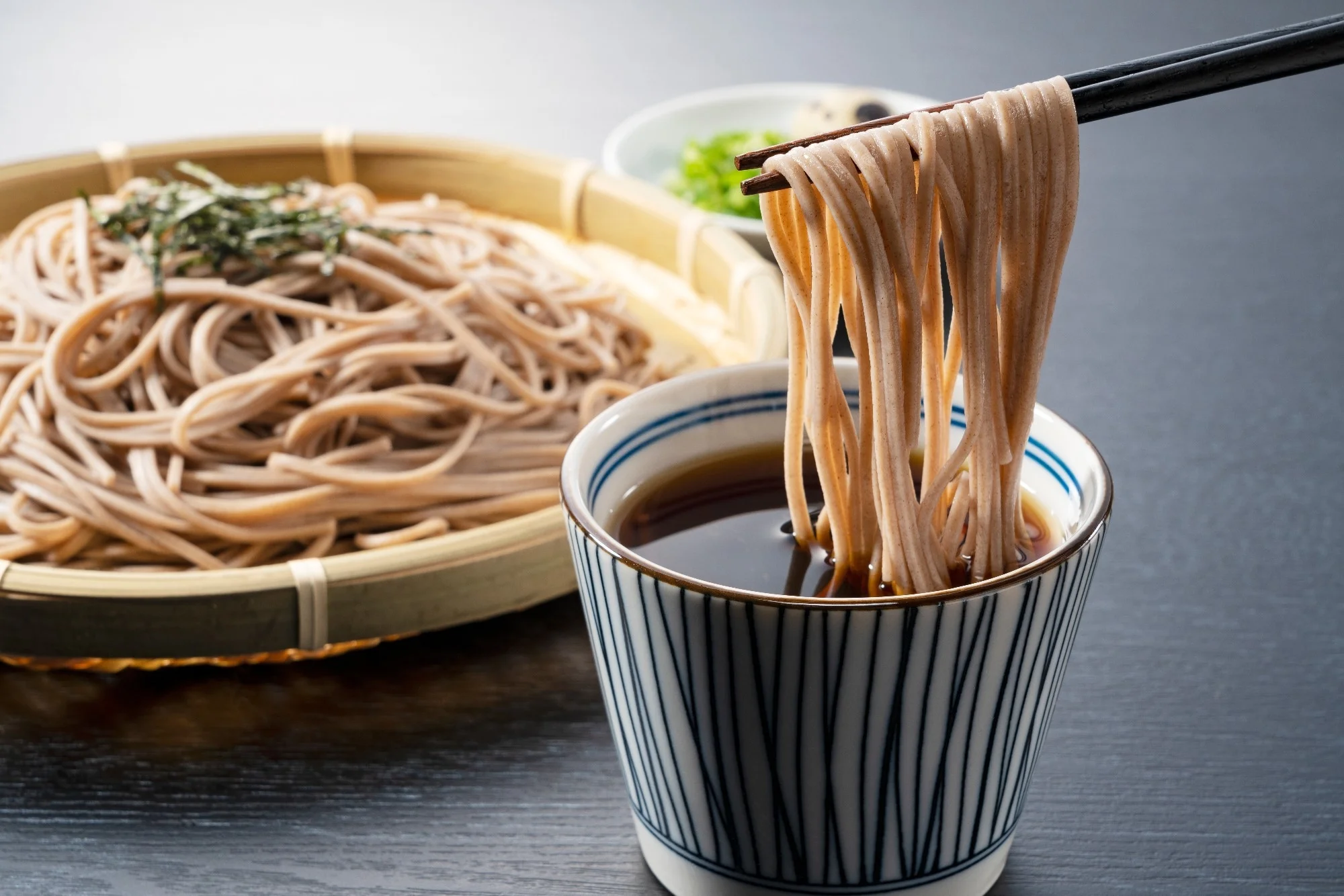
Incorporating authentic Soba noodles into your diet, whether served chilled with a tsuyu dipping sauce in the summer or hot in a savory broth in the winter, is a delicious and highly effective way to upgrade your nutrition and invest in your long-term cardiovascular and metabolic health.
Would you like me to suggest a few simple and healthy Soba noodle recipes that maximize these nutritional benefits?